Contents in this page
The Singapore Food Agency Marine Aquaculture Centre
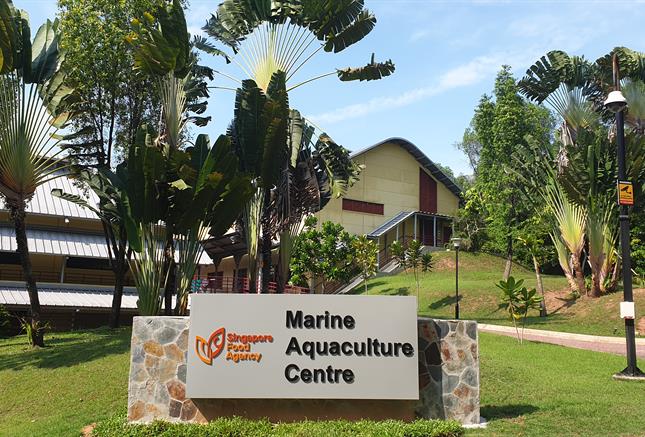


The Marine Aquaculture Centre in Singapore is a core facility for research and development in collaboration with partners and the industry. Its main aim is to advance Singapore's capabilities in tropical marine aquaculture R&D.
Contents in this page
© 2026 Singapore Food Agency
Last Updated 17 Jun 2026
The Marine Aquaculture Centre (MAC) is located on St John's Island in the open southern waters of Singapore.
As the R&D hub for tropical marine aquaculture, the Marine Aquaculture Centre (MAC) plays a crucial role in transforming Singapore's agri-food industry.
MAC enables the aquaculture industry to grow more with less in resource-scarce Singapore by deepening our expertise and building up our R&D ecosystem in tropical marine aquaculture through partnerships with the industry and academia.
For instance, MAC conducts R&D on large-scale hatchery production technology and fish nutrition (e.g. fish feed) which are more nutritious and, at the same time, environmentally sustainable. Local hatcheries have since adopted MAC’s live-feed production and hatchery protocols for their fry production.
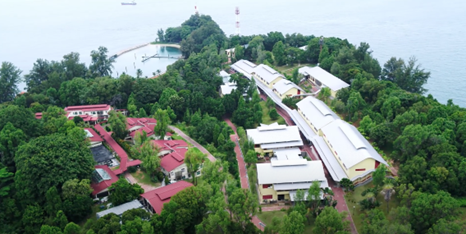
The Centre has 14 purpose-built blocks that house specialized research facilities, incubation modules, and essential auxiliary structures for aquaculture research.
Besides conducting its own R&D, MAC also partners various Research Institutes (e.g. Temasek Life Sciences Laboratory and Tropical Futures Institute) and Institutes of Higher Learning in Singapore to drive innovation and conduct cutting-edge tropical marine aquaculture research.
MAC also serves as a venue for aqua-tech companies to test-bed their technology to enhance tropical marine aquaculture practices.
MAC supports local R&D efforts with its expertise in crucial areas of fish husbandry such as breeding, live feed, hatchery production, and fish diet formulations.
Local researchers have access to facilities purpose-built for aquaculture research at the MAC. They include replicated tank systems and incubator spaces, which are ideal for the commercial test-bedding of R&D outcomes.
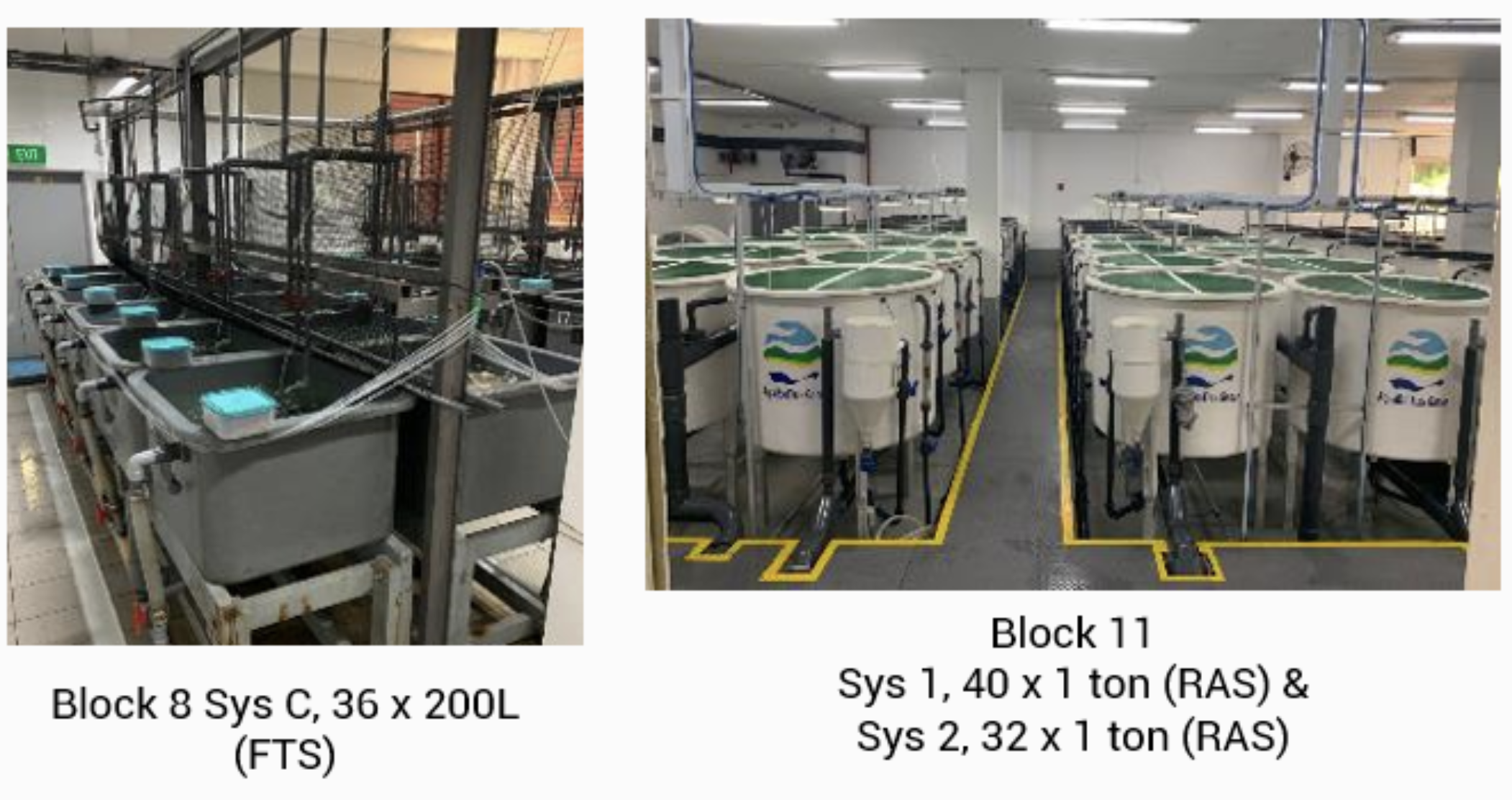
Experimental tank systems of different tank volume for fish trial.
Local researchers also have access to key aquaculture research and feed production resources, including eggs, larvae, rotifers, and microalgae.
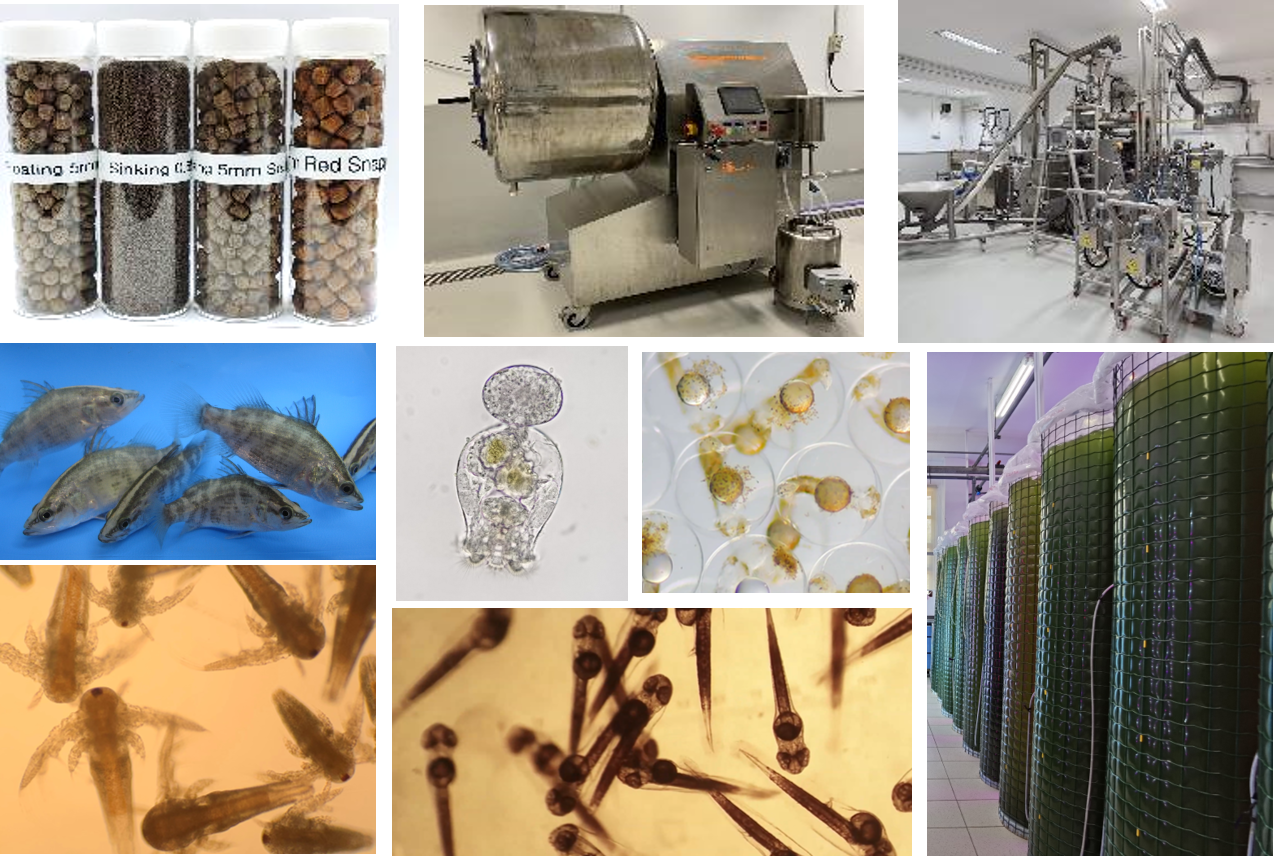
Clockwise from top left: On-site fish feed production, vacuum coater, twin screw extruder, microalgae, seabass larva, Artemia nauplii, seabass fingerlings, rotifer, seabass egg.
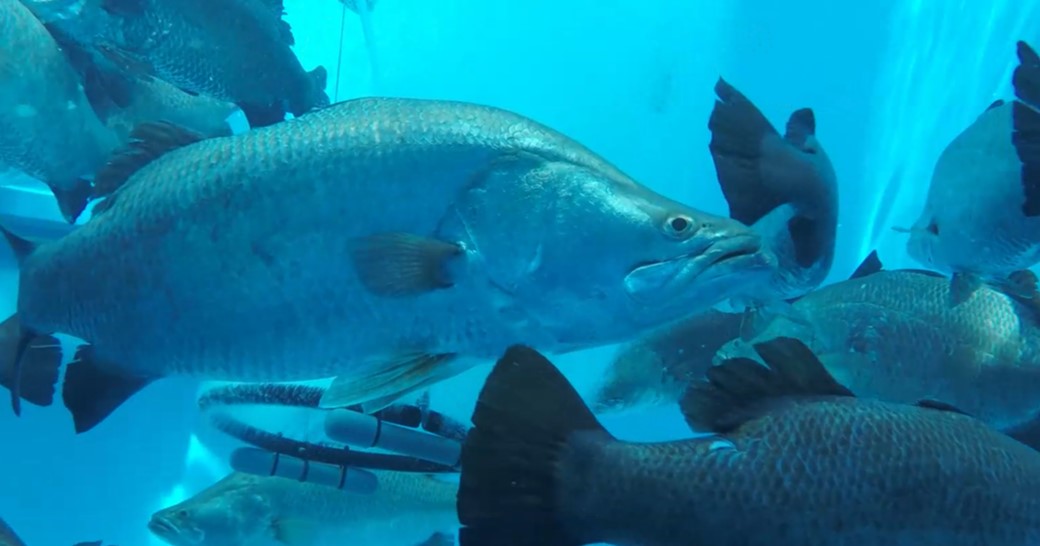
Asian seabass brooders kept at MAC. Brooder are fish chosen for producing offspring. These brooders are selectively bred for faster growth, have better resistance to diseases, and improve nutritional value. Their offspring inherit these desirable traits and qualities.
MAC collaborated with Temasek Life Sciences Laboratory to develop the Asian seabass selective breeding programme, where brood stock (fish selected specifically for breeding) was meticulously selected using aquaculture genomic tools.
The genomic tools identified fish with desirable traits for breeding (e.g. faster growth rate, higher disease resistance and omega-3 fatty acid content).
As the brood stock produced subsequent generations of offsprings, the programme gradually led to a lineage of fish that inherited and accentuated these desirable traits, without the use of genetic modification. These fast-growing, disease-resistant fingerlings have higher survival rates, increasing farm yields and giving local fish farmers a productivity boost.
To shift local hatcheries from large outdoor ponds to high-capacity indoor facilities that use only a fraction of the size, MAC developed an intensive indoor hatchery that features a Recirculating Aquaculture System (RAS) – a technology that local fish farmers can adopt for indoor, large-scale, closed-loop fish production.
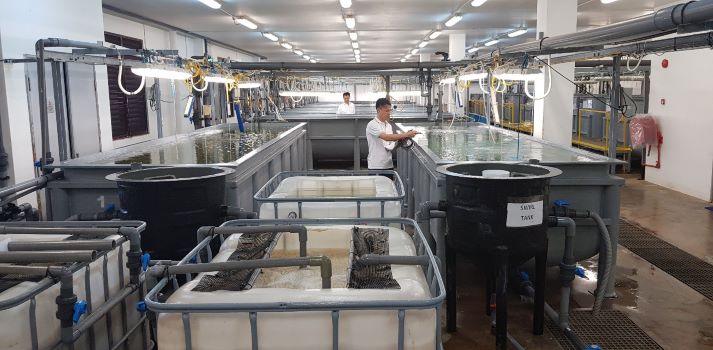
An indoor hatchery featuring a Recirculating Aquaculture System (RAS), designed to improve productivity and minimise environmental impact.
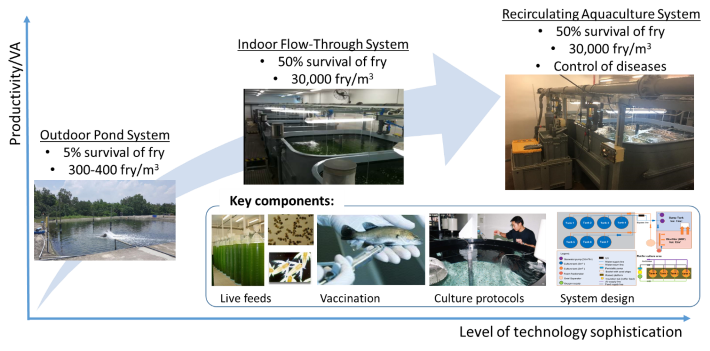
MAC conducts hatchery R&D that leads to technology and sustainable farming practices that local fish farms can adopt to increase their production yield and quality.
There are multiple benefits to this system e.g. the recycling of clean water saves resources and minimises waste discharge, and the contained indoor environment ensures that fishes are not exposed to harmful elements and can grow in a controlled environment. With this technology, fish farmers can potentially improve fish fry survival with better biosecurity measures and intensify production using less space.

The Aquaculture Nutrition Facility is purpose-built for research into fish feed nutrition.
Aside from R&D, MAC also provides technical advice to help local farms adopt sustainable farming practices and technology.
This includes advising farms on setting up live feed cultures and hatcheries, developing protocols for hormone injections, and using fish breeding techniques to boost yield.
Farmers can seek these advisory services through the SFA Feedback Form.
While MAC is not available for public tours or walk-in visitors, it offers Learning Journeys for students studying aquaculture to enhance their learning experience. These visits are available once a month, lasting 1.5hrs each for a group of maximum 20 pax. To book, apply here.
For more information
You can contact us at:
Marine Aquaculture Centre
St John’s Island, Singapore
Tel: (65) 9046 4787


