A-A+
A-A+

National Centre for Food Science

The National Centre for Food Science (NCFS) is Singapore’s national reference laboratory for food science.


Contents in this page

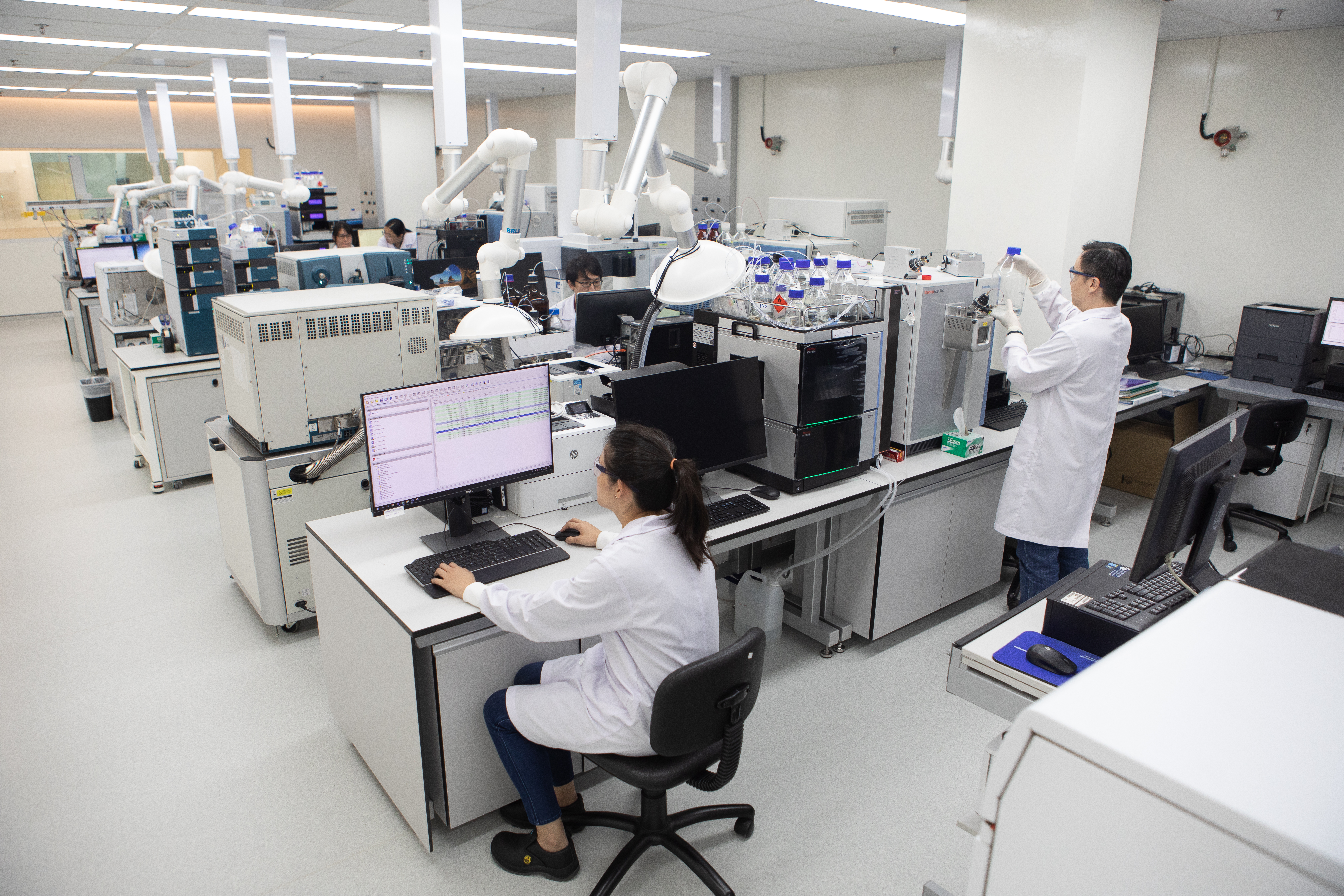
      The NCFS plays a crucial role in ensuring a supply of safe food in Singapore. It provides scientific evidence through laboratory testing, risk assessment, data science and exposure analysis to ensure food safety. 

      NCFS is located at the International Business Park and is a key component of Singapore’s integrated food safety programme.

      NCFS is located at the International Business Park and is a key component of Singapore’s integrated food safety programme.


      What is the purpose of the NCFS? 

      NCFS conducts food safety tests, research and development (R&D), and risk assessment to support SFA’s regulatory functions in ensuring a supply of safe food for Singapore.  

      NCFS brings together key competencies in food safety regulatory sciences, food safety diagnostics, and R&D in food safety. The Centre is equipped with state-of-the-art laboratory equipment and facilities.  

      The Centre maintains a vigilant watch by constantly scanning the environment for new and emerging threats, and developing new testing capabilities to detect emerging chemical, radiological, and microbiological hazards in food.

      What tests are performed by NCFS?

      NCFS tests and monitors food and food products along the supply chain to ensure they are safe, and free from harmful contaminants, pathogens, and toxins.

      The tests cover various aspects of food safety, from testing for disease-causing organisms and food poisoning agents to detecting foodborne pathogens, harmful chemicals, toxins, and incidents of food fraud.

      Below is a list of the tests performed by NCFS:

      • Environmental Contaminants (Chemical)
      • Process Contaminants (Chemical)
      • Drug & Pesticide Residues
      • Foodborne Toxins
      • Food Radioactivity
      • Food Allergens
      • Food Microbiology (Bacteria, Virus, Parasites) Tests
      • Food Additives
      • Food Contact Materials (FCMs)
      • Genetic Modified Organism (GMO) testing

      What are the quality standards of NCFS?

      NCFS’ laboratories meet internationally recognised standards by:

      • having a rigorous Quality Assurance programme that includes using validated methods and reference materials, and applying strict Quality Control measures at all stages of testing from sample management to final reporting and verification of test results. This will provide assurance to our regulatory counterparts that NCFS is able to produce accurate tests
      • actively participating in Inter-Laboratory Proficiency Testing Schemes that assess the laboratory’s ability to produce reliable test results, comparable to those analysed by internationally recognised laboratories
      • maintaining accreditation with the Singapore Accreditation Council-Singapore Laboratory Accreditation Scheme (SAC-SINGLAS) for compliance with the ISO/IEC Guide 17025: General Requirements for the Competence of Calibration and Testing Laboratories

      NCFS also keeps abreast of the latest technology to achieve the highest level of expertise, technical standards, efficiency and quality assurance.

      What roles does NCFS play regionally or globally?

      icon-accordion-down
      WHO Collaborating Centres are institutions designated to carry out activities in support of WHO programmes. NCFS has been designated as a WHO Collaborating Centre for Food Contamination Monitoring from 2020 to 2024.
      icon-accordion-down
      WOAH maintains a network of Collaborating Centres to provide scientific expertise and support to the WOAH and its Members, and to promote international collaboration on animal health and welfare. The NCFS has been designated as a WOAH Collaborating Centre for Food Safety since 2014.
      icon-accordion-down

      AFRLs are government testing laboratories with competence in specific areas of expertise.

      NCFS serves as the ASEAN Food Reference Laboratory in the following areas:

      1.Pesticide Residues (since 2004)
      2.Mycotoxins (since 2004)
      3.Environmental contaminants (since 2014)
      4.Marine Biotoxins and Scrombrotoxin (since 2019)

      icon-accordion-down
      NCFS Food Radioactivity Laboratory joined ALMERA on 3 July 2023. 

      Are tours or learning journeys available?

      NCFS is not open to the public for visits, tours, or walk-ins. NCFS hosts learning journeys for teachers and students from tertiary institutions.

      Learning Journeys
      Suitable forPreferably students studying science-related topics from polytechnics and universities
      PaxMaximum 20 pax per session
      SessionsEvery second Friday of the month
      Timing9.30am - 11.00am
      To requestApply here


      For more information
      You can contact us via the SFA Online Feedback Form.

      Last updated: 18 Apr 2026