A-A+
A-A+

Information on Antimicrobial Resistance

When bacteria, viruses, and other microorganisms evolve to withstand drugs meant to eliminate them, they become resistant. This means the drugs can no longer kill these microorganisms, allowing them to continue growing. As a result, medicines may lose their effectiveness in treating illnesses, making recovery more difficult.

Overview

Contents in this page

      What is Antimicrobial Resistance?

      Antimicrobial resistance (AMR) refers to the ability of microorganisms (such as bacteria, viruses, fungi, and parasites) to continue to live or grow in the presence of drugs that were originally meant to kill or inhibit them.

      AMR is a natural process that happens over time through genetic changes in microorganisms. We cannot stop microorganisms from becoming resistant, but we can slow down the process. 

      The spread of AMR has been accelerated by human activity, mainly through the misuse of antimicrobials. Antimicrobials include antibiotics, antivirals, antifungals, and antiparasitics. 

      What happens if microorganisms develop resistance?

      Microorganisms that develop resistance to drugs meant to kill or inhibit them are sometimes referred to as ‘superbugs’. They can be found in people, animals, food, and the environment (e.g. water and soil).

      Diseases in people and animals, caused by AMR-resistant infections, become very difficult or impossible to treat and make other medical procedures and treatments riskier.

      This increases the risk of disease spread, severe illness, disability, and death. 

      In addition, drug-resistant infections impact animal and plant health, reduce farm production and productivity, and threaten food security. 

      How do we stop the AMR microoganisms from spreading?

      Food producers, consumers and government agencies must work collectively to stop or slow down the spread of AMR microorganisms to ensure food safety.

      Farmers

      How do our farmers help combat AMR?

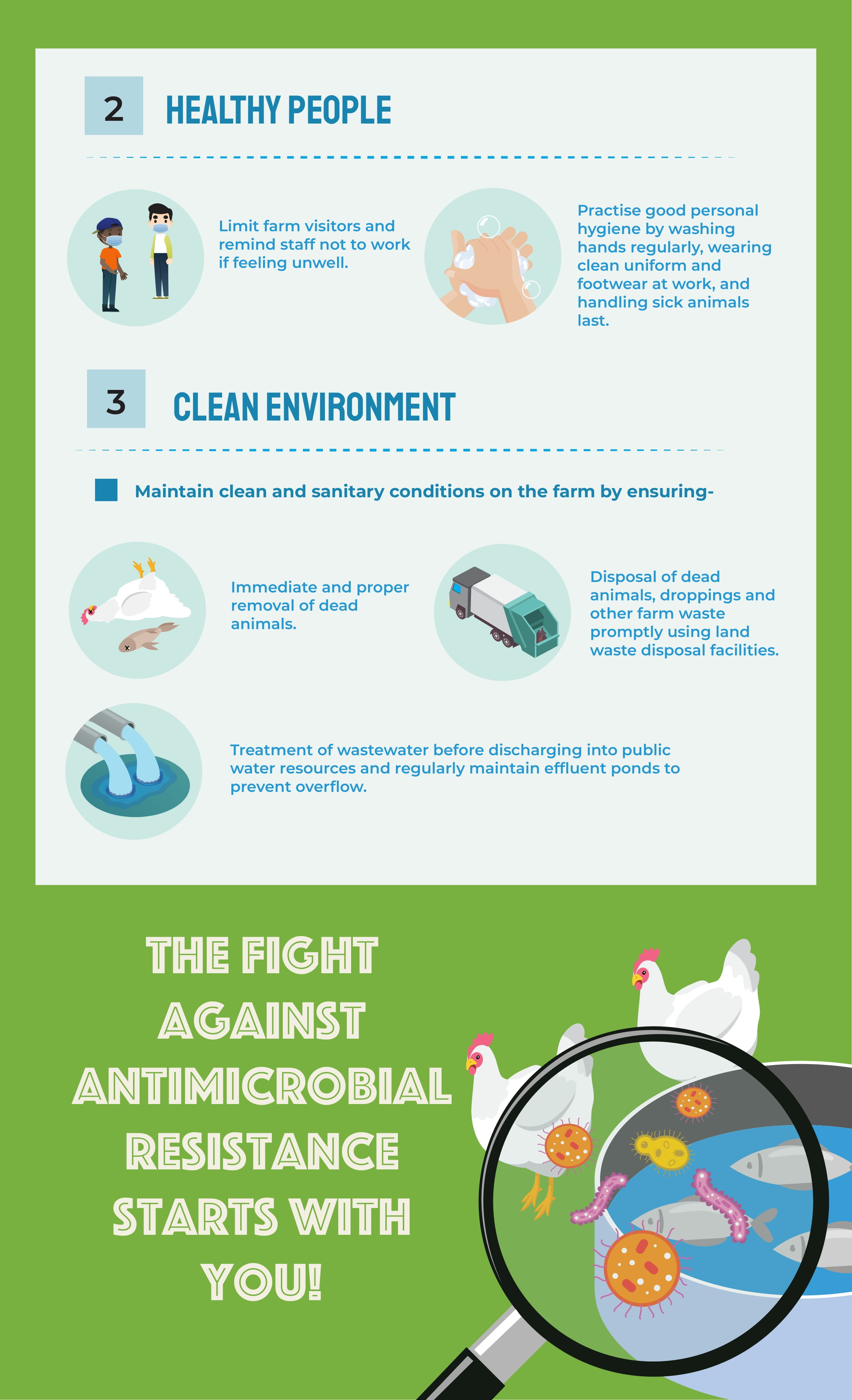
      The fight against antimicrobial resistance begins with you!

      Antimicrobials, which come in the form of antibacterials, antivirals, antiparasitic agents, and antifungals, are used to kill and slow the spread of microorganisms in farm animals.

      When antimicrobials are used irresponsibly in food animals, the disease-causing microorganisms in the animals develop resistance and turn into microorganisms that are highly resistant to drugs meant to kill or inhibit them. 

      This makes disease outbreaks in farms very hard and expensive to treat, and also increases the risk of the disease spreading to other animals and into the food chain.

      Use the resources below to learn how you, as a farmer, can play your part in slowing the rise of antimicrobial resistance in food animals and ensure that the food you produce is safe for all Singaporeans.


      Combatting Antimicrobial Resistance on a Coastal Fish Farm

      Watch the video to learn how to properly use antibiotics, antivirals, antifungals, and antiparasitics safely on your farm.


      Veterinary Drug Residues in Food

      Find out how you can reduce our exposure to veterinary drugs in food.

      Veterinary Drug Residues in Food


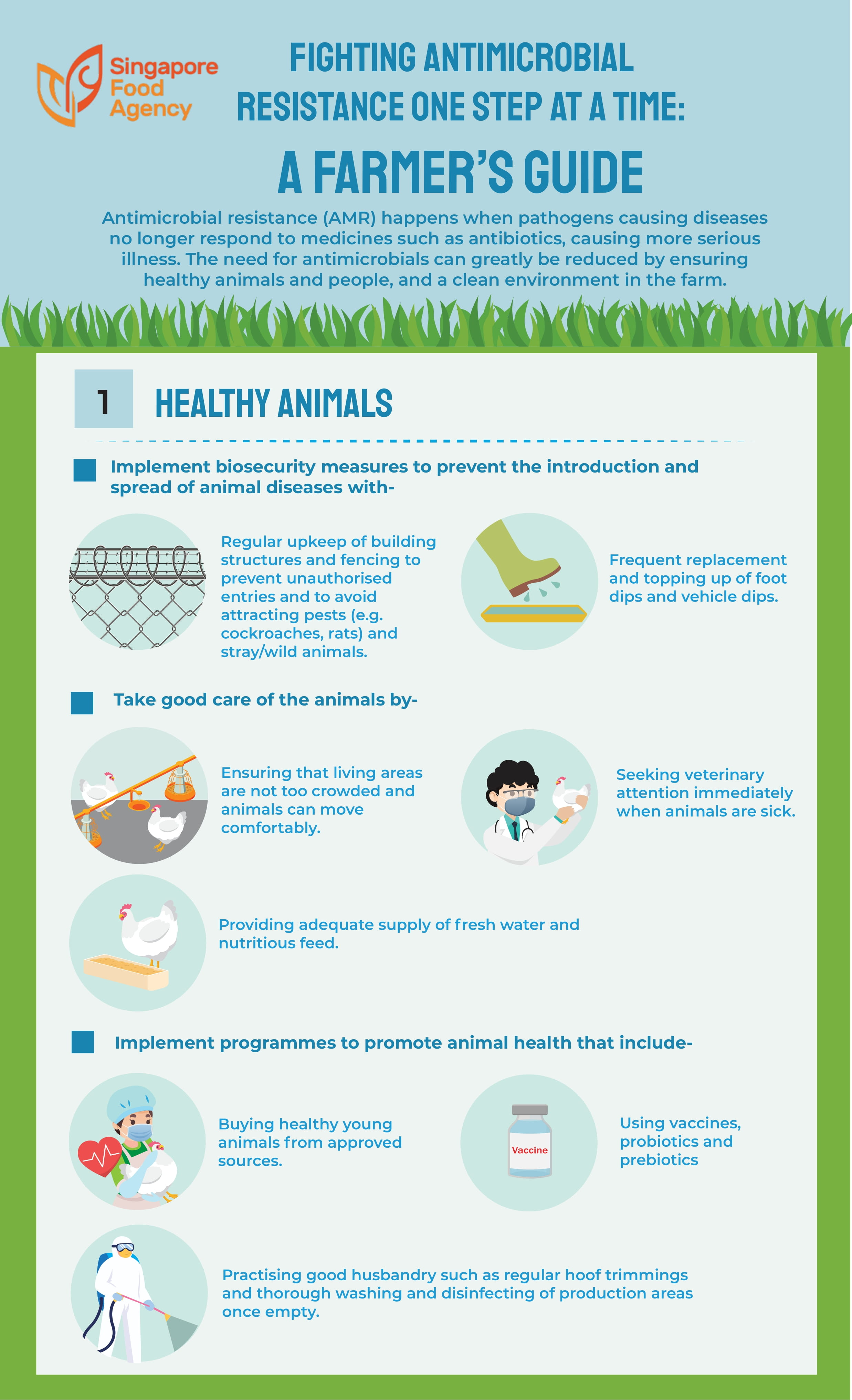
      Fighting Antimicrobial Resistance One Step At A Time: A Farmer's Guide

      Download the infographic below and follow the tips for healthy animals, healthy people, and a clean environment.

      Fighting Antimicrobial Resistance One Step At A Time: A Farmer's Guide
      1f672018e5afd931ab413c8e75d97f0f077a78f112b509db0448f14999882c47

      Consumers

      How can consumers play their part?

      Food can be contaminated at any point along the food chain. While SFA remains vigilant and works to ensure that regulatory measures are in place and properly enforced, the food industry and consumers can also play a part to ensure food safety. 

      icon-plus-expandicon-dash

      Expand all

      icon-accordion-down

      Adopting good food safety practices during food handling and preparation reduces the risk of contamination.

      Here are some good food safety practices you can start straight away:

      • separate raw and cooked food to prevent cross contamination
      • wash your hands before handling food
      • wash fruits and vegetables if eating them raw, as they can be contaminated by bacteria
      icon-accordion-down

      Always cook food thoroughly! Antibiotic-resistant bacteria found in raw meat can be eliminated by thorough cooking. 

      Pathogenic bacteria in raw food, which can cause food poisoning (e.g. Salmonella), whether resistant or not, are also killed during cooking.

      icon-accordion-down
      When you are ill with diarrhoea or are vomiting, do not handle and prepare food!

      Be especially careful when preparing food for vulnerable groups, such as children, pregnant women, older adults, and those with compromised immune systems.
      icon-accordion-down
      All food products, both imported and locally produced, are required to comply with SFA’s food safety standards and requirements.

      The use of certain antibiotics in food-producing animals are banned by SFA, and strict limits are also imposed on antibiotic residues in food products.

      SFA also monitors meat and meat products to ensure there are no residues of banned drugs used in the animals and that permissible drugs are used within prescribed limits.
      icon-accordion-down
      Some consumers mistakenly believe that consuming food containing AMR bacteria will make them resistant to medicines. Some also advocate that antibiotics should never be used in farms.

      Learn more about AMR to be better informed. 

      Government

      Contents in this page

          What is the Singapore government’s response to AMR?

          AMR is a serious threat to global public health. It requires a multi-sectoral and multi-disciplinary approach to tackle the problem, as antimicrobial-resistant microorganisms can be transmitted through the food supply chain, the environment, and direct contact between animals and humans. 
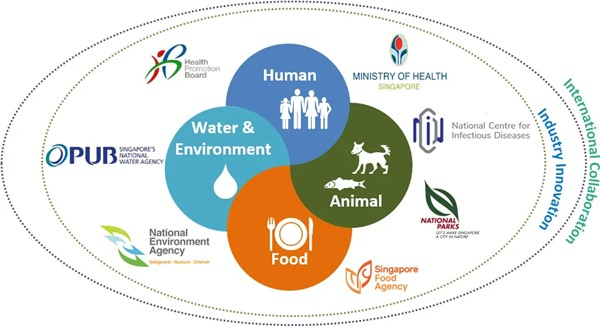
          The plan provides a framework to strengthen and enhance activities to combat AMR across the human, animal, food, and environmental sectors.

          It is aligned with the World Health Organization's (WHO) Global Action Plan on AMR, as well as the standards and guidelines established by intergovernmental bodies such as the Food and Agriculture Organization of the United Nations (FAO) and the World Organisation for Animal Health (OIE).

          Agencies involved in the National Strategic Action Plan on AMR

          The National Strategic Action Plan on AMR (2017) was developed by:

          • Ministry of Health (MOH)
          • National Environment Agency (NEA)
          • Former Agri-food & Veterinary Authority of Singapore (AVA)
            (SFA was formed in April 2019 and consolidated food-related functions, including from the former AVA) 
          • Public Utilities Board (PUB)

          How does SFA combat AMR?

          SFA has in place a food safety system based on science and risk analysis. All food products (both imported and locally produced) are required to comply with our food safety standards and requirements.

          icon-accordion-down

          SFA monitors the use of veterinary drugs and bans the use of several types of drugs on food-producing animals in local farms.

          The use of antibiotics in farming should be limited to treating bacterial infections. Antibiotics are not allowed for growth promotion.

          When veterinary drugs are used on food animals, farmers must strictly adhere to the prescribed usage and observe the drug withdrawal periods.

          Should drug withdrawal periods not be adhered to, trace levels of antibiotics may be detected in the meat during SFA’s surveillance checks.

          SFA also works closely with local farmers to implement good animal husbandry practices, prevent disease incursion and improve disease management, which reduces the need for antimicrobials on the farm.

          icon-accordion-down

          Antibiotics are the major group of veterinary drugs used globally by the livestock and aquaculture industries for the prevention and treatment of infectious diseases. 

          As over 90% of food in Singapore is imported, it is important to maintain a robust drug residue monitoring system to ensure the safety of imported meat products. 

          SFA regularly inspects and samples all imported and locally produced food products. Food products that do not comply with the Singapore Food Regulations will not be allowed for sale.

          SFA’s National Centre for Food Science (NCFS) has analytical capabilities that can test for more than 100 veterinary drugs in food of animal origin, enhancing the speed and efficiency with which SFA detects veterinary drug residues in meat.

          icon-accordion-down
          SFA monitors the AMR profile of common food-borne pathogens on local poultry and ruminant farms, and in imported and retail food products.

          The information gathered provides valuable insights into the development of AMR locally and helps SFA take appropriate precautionary measures.

          As part of the One Health approach, SFA is working with other agencies to implement a national integrated surveillance system to track the spread of AMR not only in food but also in humans, animals, and the environment.
          icon-accordion-down
          SFA promotes its accreditation and certification schemes to advocate good husbandry practices and disease prevention to reduce the use of antimicrobials, and to promote their prudent and responsible use among local farmers.

          For example, the Singapore Egg Quality Scheme and Good Aquaculture Practices certification emphasise quality management, good hygiene and farm management practices, and the monitoring of veterinary drug use on the farm. 

          SFA will continue to promote its accreditation and certification schemes to advocate good husbandry practices and disease prevention to reduce the use of antimicrobials, and promote their prudent and responsible use among local farmers.
          icon-accordion-down

          SFA leverages international events such as World Health Day and World Antimicrobial Awareness Week to raise public awareness about AMR.

          For example, during World Antimicrobial Awareness Week, SFA runs campaigns on social media, participates in public outreach events, and conducts school talks on food safety.

          SFA Officers volunteering at this year’s World Antibiotic Awareness Week (WAAW) library outreach events

          SFA officers volunteering at the World Antibiotic Awareness Week (WAAW) library event organised by Saw Swee Hock School of Public Health (SSHSPH) and supported by the Antimicrobial Resistance Coordinating Office (AMRCO) – National Centre for Infectious
 Diseases (NCID).

          Icon Tip

          Like and follow us on Facebook and Instagram for more content and updates on AMR, food supply resilience and food safety.

          icon-accordion-down

          SFA also coordinates efforts within the ASEAN region to combat AMR and leads the development of regional guidelines on the use of antimicrobials in food-producing animals.

          Additionally, SFA builds capabilities in the region by sharing technical expertise and experience with other countries, such as conducting regional training workshops on antibiotic residue testing.

          FAQs

          FAQs

          icon-accordion-down

          People do not develop resistance to antimicrobials; only bacteria and other microbes do.

          There is no conclusive evidence that the long-term consumption of food containing AMR bacteria results in increased antimicrobial resistance in humans.

          Consuming food contaminated with harmful AMR bacteria may lead to foodborne infections that are harder to treat due to a reduced range of effective antimicrobials.

          icon-accordion-down

          All meat and meat products in Singapore, whether the animals were raised with or without antibiotics, must comply with Singapore’s strict food safety standards. They are safe for consumption when good food safety practices prescribed are followed.

          Antibiotics are necessary to control and treat diseases in animals. Livestock, poultry, and fish treated with antibiotics cannot be harvested until a specified withdrawal period has been observed, allowing antibiotic residues to be sufficiently cleared from the animal’s system.

          The responsible use of antibiotics in food-producing animals helps lower the prevalence of antimicrobial-resistant pathogens.

          Eating meat from animals that have been treated with antibiotics as prescribed does not cause antibiotic resistance in people.

          icon-accordion-down

          SFA does not support claims regarding the absence of hormones and antibiotics in food.

          Claims indicating that animals for food use were ‘raised without the use of antibiotics’ on prepacked food products are permitted, provided the production method/process is endorsed and verified with certifications issued by the Competent Authority.

          For details, see Labelling Requirements for Food

          icon-accordion-down

          Antimicrobials are necessary to treat infections in animals and should be used only as prescribed by a veterinary health professional, with strict adherence to dosage, duration, method of administration, and withdrawal period.

          The prudent use of antibiotics involves:

          • only using antibiotics when it is absolutely necessary, such as during a bacterial infection and not a viral infection
          • only using antibiotics when other treatment options are no longer viable
          • using the correct class or type of antibiotics that target the specific bacteria

          The use of antimicrobials as growth promoters is not allowed.

          The prudent use of antimicrobials in farms not only contributes significantly to the slowing down of the spread of AMR, it also offers many benefits. For instance:

          • Antimicrobials help treat infections quickly and efficiently, ensuring a better quality of life for infected animals. This also means the spread of the infection is controlled, which safeguards the health of other animals on the farm.
          • Effective antimicrobial treatments also help farmers to minimise production losses due to the mortality of sick animals or weight loss in sick animals.
          • They also minimise the risk of spreading microorganisms to consumers.
          For more information, see Veterinary Drug Residues in Food.


          Last updated: 18 Apr 2026