Insects for Food and Feed


Herman Teo

10 Apr 2023
Introduction
While the use of insects as human food is relatively new in Singapore, several species of edible insects such as silkworm pupae and crickets have traditionally been consumed in parts of Asia. In recent years, the commercial farming of insects for human consumption and livestock feed has been promoted by the Food and Agriculture Organisation (FAO) as a form of sustainable protein, both for human food and for animal feed. The European Union and countries such as Australia, New Zealand, Korea and Thailand have also allowed the consumption of certain insect species.
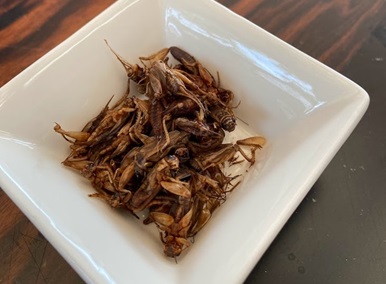 | 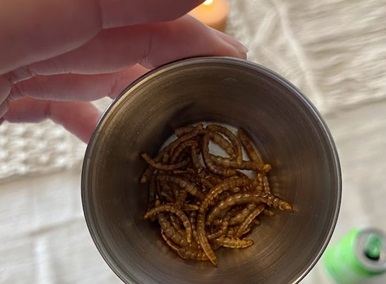 |
Roasted crickets and mealworms
How does SFA Regulate Insects for Human Consumption and Animal Feed?
In Singapore, SFA has put in place a regulatory framework to assess the safety of insects for consumption. The key principles of the framework are as follows:
- The species of insect must be safe and does not produce toxic substances. SFA has an approved list of insects that we have assessed and found safe for humans to eat.
- Insects must be farmed in a controlled environment and not harvested from the wild. This is to prevent introduction of diseases, contaminants, and parasites.
- The substrate (what the insects eat) must not impart contaminants to the insects. For example, the use of manure and rotten food is not allowed.
- The final product must be safe and compliant with SFA’s food regulations.
To date, SFA has approved 16 insect species for human consumption and as animal feed. These can be found in the Food Safety and Security (Catalogued Insect-like Species) Order 2025. Insects which are not on this list would need to undergo evaluation to ensure that they can be used for human consumption and animal feed.
Guided by SFA’s food safety monitoring programme, we conduct regular inspections, and sampling of both imported insect products as well as local insect farms to ensure that they meet our food safety standards. Food that is found to be non-compliant with our food safety standards will not be allowed for sale.