Singapore, 8 November 2024 - The Animal & Veterinary Service (AVS), a cluster of the National Parks Board (NParks), and Singapore Food Agency (SFA) successfully concluded a ground deployment exercise (GDX) on 8 November 2024. The exercise was carried out to test AVS and SFA’s operational readiness in responding to an outbreak of high pathogenicity avian influenza (HPAI) (commonly known as bird flu) at local poultry farms.
Global Outbreak of HPAI
HPAI is a highly contagious viral infection that mainly affects birds. Sporadic infections of mammals and humans have been reported through direct or indirect exposure to infected birds. The current global outbreak of HPAI subtype A(H5N1) had caused significant deaths in wild birds and domestic poultry worldwide, and an increasing number of infections in mammals. The widespread outbreak of A(H5N1) in many regions of the world underscores the need for planning and preparedness to prevent its incursion into Singapore.
Given HPAI's threat to poultry, birds and public health, AVS and SFA have jointly developed a contingency plan to contain, eradicate and recover from the detection of HPAI in susceptible animal populations to regain Singapore’s disease-free status and safeguard animal and public health. In the event of an outbreak of HPAI in our poultry farms, AVS and SFA will take immediate action to control and eradicate the disease in line with international practice.
Exercise Gallus X
Codenamed “Exercise Gallus X”, the exercise involved AVS and SFA, along with logistics partner, ST Logistics Pte Ltd, in managing a simulated outbreak of HPAI at a local poultry farm. Such exercises to respond to disease scenarios are conducted routinely, with the latest table-top exercise jointly conducted by both agencies in March 2024.
The GDX provided participants an opportunity to test, review, and examine the coordination and communication between agencies and stakeholders, decision-making, activation of and delivery by our logistic partner, and ability to effectively manage a HPAI outbreak. Its objectives included:
- Setting up the staging site (temporary infrastructure) within the stipulated time frame to support ground operations at a poultry farm
- Carrying out of functional operations required to manage a simulated HPAI incursion at a local poultry farm effectively
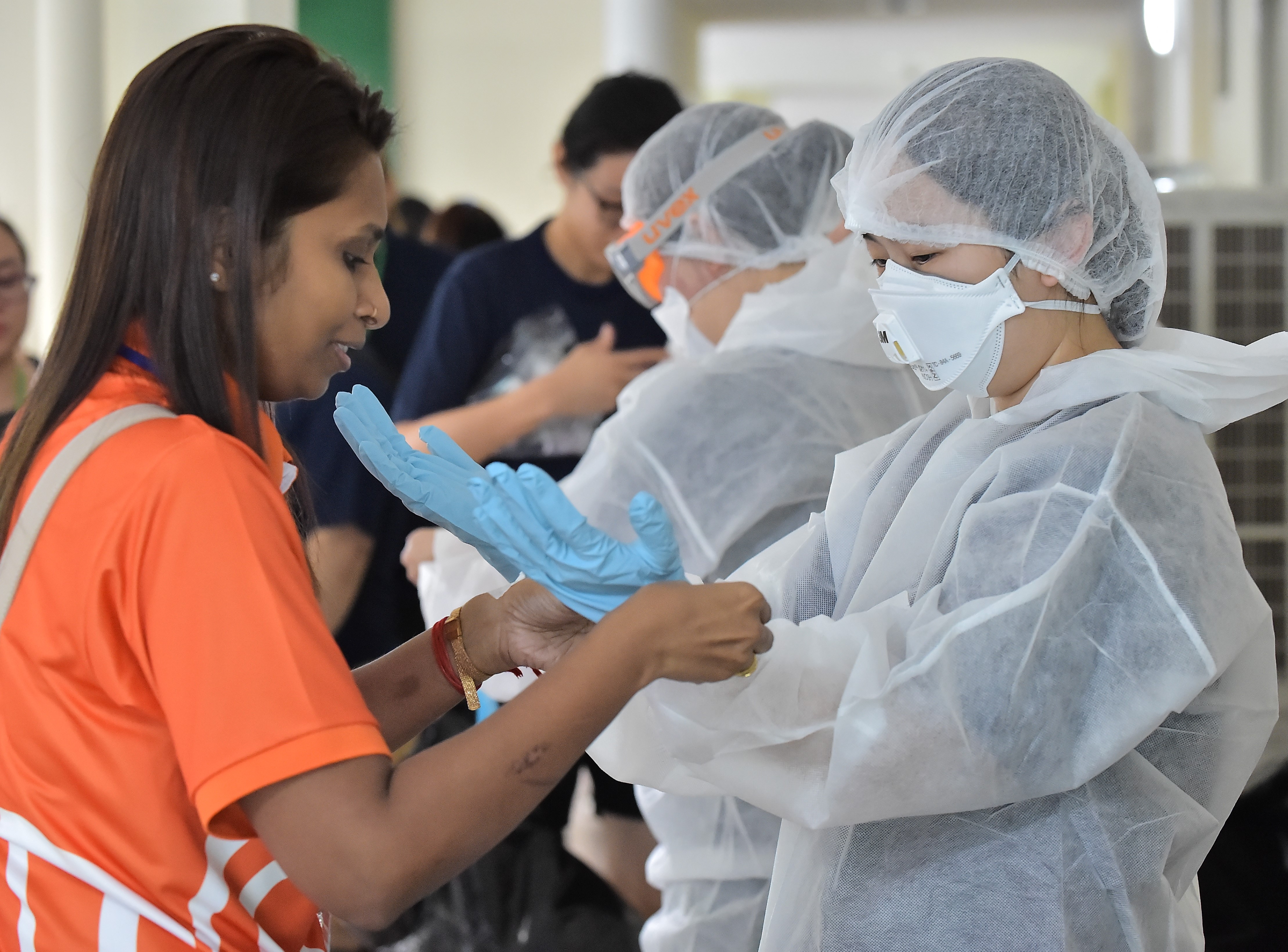
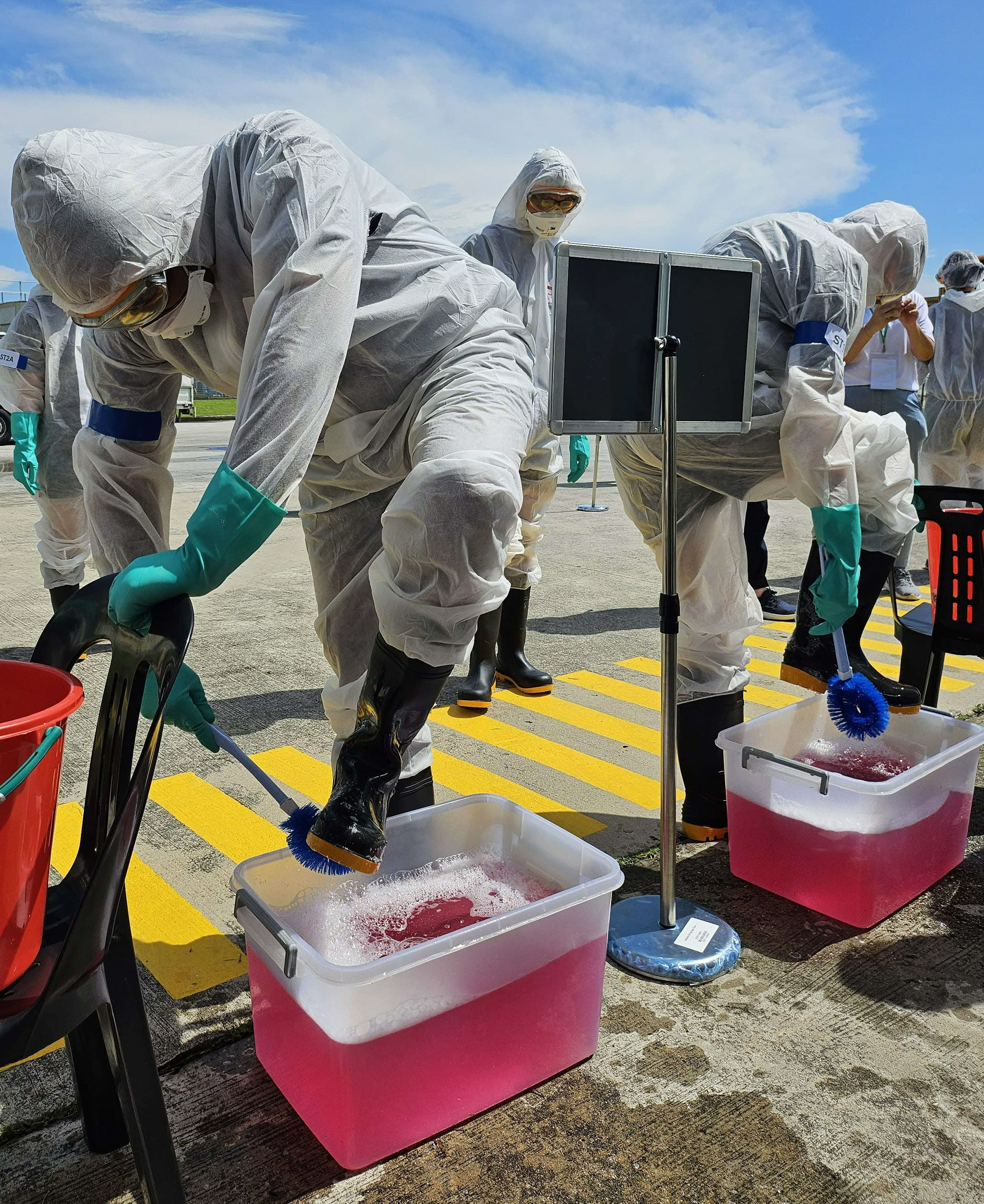
- The efficient delivery of essential supplies and support services by ST Logistics, such as assisting officers in the donning of personal protective equipment and personnel decontamination.
All objectives of the GDX were met. Overall, the exercise provided agencies, our logistics service provider, and the poultry farm, the opportunity to go through the ground realities and identify gaps in current protocols to enhance the capacity of agencies to handle real-life HPAI outbreaks efficiently. This exercise also enhanced the communication and coordination between various agencies to ensure a quick and effective response during an actual outbreak.
AVS and SFA will continue to improve our operational readiness in responding to potential outbreaks of HPAI at local poultry farms and monitor developments of HPAI worldwide.
For more information on Singapore’s biosurveillance strategy regarding HPAI, refer to Annex A.
Annex A– Biosurveillance strategy to keep Singapore free from HPAI
All imported poultry and poultry products, including eggs, must come from sources accredited by SFA. Imports from regions affected by HPAI will be suspended and only products that have been heat treated to inactivate the HPAI virus will be allowed. AVS places strict import conditions on the import of poultry and ornamental birds. Inspection of imported consignments of poultry and ornamental birds are also carried out at our borders, in an effort to prevent the entry of HPAI into Singapore.
Local poultry farms must implement good biosecurity measures, including measures to prevent wild birds from coming into contact with their poultry flocks. Biosurveillance of birds imported or residing at local farms, poultry slaughterhouses, ornamental bird shops, and wild birds are also conducted regularly.
SFA and AVS will continue to monitor developments of HPAI worldwide and in the region, such as through horizon scanning for related information and engagement with overseas authorities.
Public advisory on wild birds and bird flu
While Singapore remains free from bird flu, it is endemic in the region, highlighting the need for Singapore to be vigilant in our biosurveillance and biosecurity programme. People working in close contact with birds are advised to observe good personal hygiene and take necessary measures such as appropriate personal protective equipment when handling them to minimise public health risks. As a precaution, members of the public should not touch or feed wild birds, including free-roaming chickens. Veterinarians and bird owners are also reminded to be on the alert for possible bird flu infections in birds. Members of the public can call AVS’ Animal Response Centre at 1800-476-1600 if they encounter wild birds that appear to be sick or to report suspected cases of bird flu.
Annex B - Photos of GDX
Personnel donning PPE during simulated exercise (Photo credit: AVS)
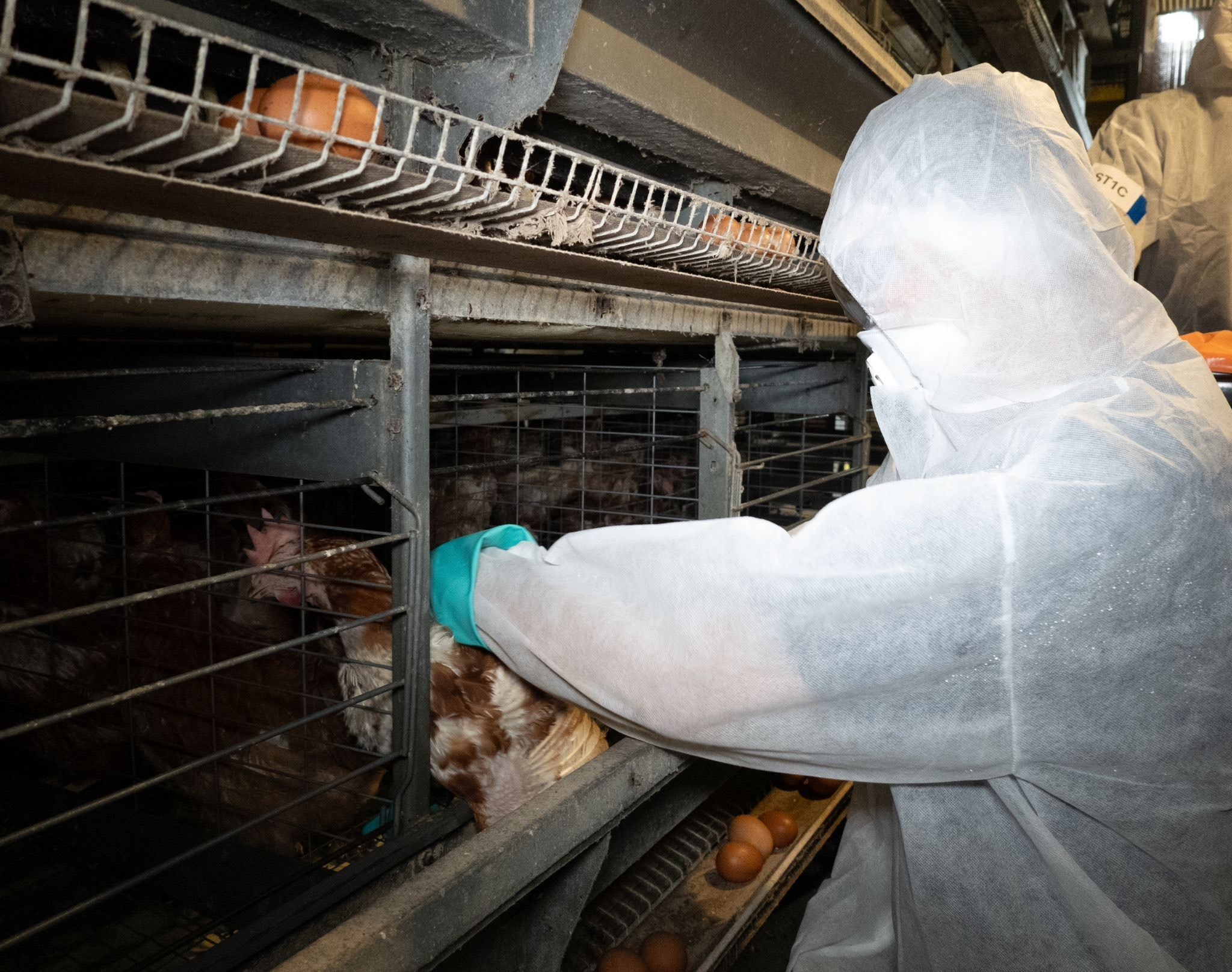
Personnel removing chicken from cage during simulated exercise (Photo credit: SFA)
Personnel undergoing decontamination during simulated exercise (Photo credit: AVS)
For more information, please contact:
| Neo Shaoqi (Ms) Manager, Communications National Parks Board Mobile: 9230 1944 Email: NEO_SHAOQI @nparks.gov.sg | Elaine Yap (Ms) Manager, Media and Social Media Department Singapore Food Agency Mobile: 8444 7208 Email: Elaine_YAP@sfa.gov.sg |
About National Parks Board (NParks)
The National Parks Board (NParks) is responsible for enhancing and managing the urban ecosystems of our City in Nature. We are the lead agency for greenery, biodiversity conservation, and wildlife and animal health, welfare and management. We are also working closely with the community to enhance the quality of our living environment.
NParks manages some 400 parks, 3,347 hectares of nature reserves, the Singapore Botanic Gardens, Pulau Ubin and the Sisters' Islands Marine Park. Adding to this is the extensive network of Nature Ways, and the over 380 km Park Connector Network that links major parks, nature areas and residential estates island-wide. Every year, we run about 3,000 educational and outreach programmes across our various green spaces.
NParks has developed an urban biodiversity conservation model, which aims to conserve representative ecosystems in land-scarce Singapore. NParks also monitors and coordinates measures to enhance the presence of biodiversity in our urban landscape.
NParks is working closely with partners in the landscape, horticulture, veterinary and animal sectors to increase productivity, and provide training for all levels of the workforce. Enhancing competencies of the industry will support Singapore’s vision of being a City in Nature.
For more information, visit www.nparks.gov.sg and www.facebook.com/nparksbuzz
About the Singapore Food Agency
The mission of the Singapore Food Agency (SFA) is to ensure and secure a supply of safe food. To safeguard Singapore's food security, SFA adopts a multi-pronged approach which includes diversifying food import sources and increasing local food production. To ensure that food in Singapore is safe for consumption, SFA has in place an integrated farm-to-fork food safety system which adopts a risk-based approach guided by science and aligned with international standards. As food safety and security is a joint responsibility, SFA provides an enabling environment that supports all stakeholders to play their part.
For more information on SFA, visit www.sfa.gov.sg